Source seamless eva insoles for casual, sports, and comfort shoes
Find 30 options for seamless eva insoles designed for casual, sports, and comfort applications. Buyers can compare specifications like material composition, size ranges, and customization features to select the best fit for their needs.
Key considerations
Products List






Comprehensive Sourcing Guide
Strategic Sourcing Guide for Seamless EVA Insoles
Understanding the Technical Profile of EVA Insoles
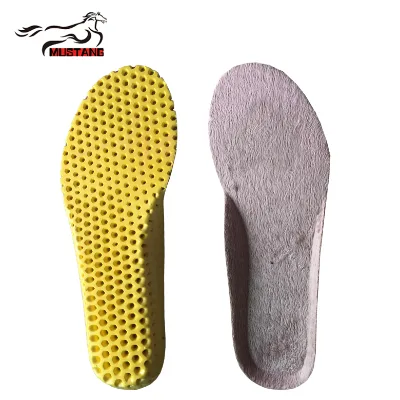
The core of sourcing seamless EVA (Ethylene-Vinyl Acetate) insoles lies in understanding the specific material properties and construction methods that define this category. EVA is a copolymer known for its lightweight nature, high elasticity, and excellent shock absorption capabilities. In the context of seamless manufacturing, the material is often processed to eliminate stitching or bonding lines that could cause friction or pressure points on the foot. The observed product attributes indicate a primary focus on "Soft" elasticity, which is a critical performance metric for user comfort. This softness is essential for insoles intended for casual wear, sports, or extended periods of standing.
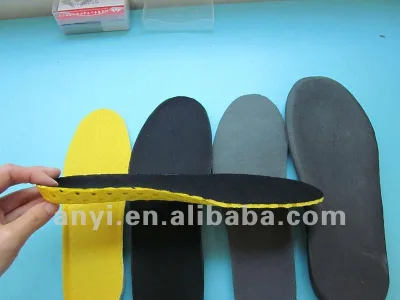
When evaluating technical specifications, buyers must look for specific material compositions. The supply data reveals variations such as "EVA" alone, as well as composite structures like "PU/EVA+Mash." The inclusion of mesh layers suggests an intent to enhance breathability, a vital feature for preventing moisture buildup during spring and autumn seasons. The seamless nature of these products often implies a molding process where the EVA is heated and pressed into a specific shape without the need for secondary assembly steps that could compromise the structural integrity.
Size compatibility is another technical pillar. The observed data points to a standard sizing range of 35-45#, covering a broad spectrum of adult footwear. Some listings specify "full sizes," indicating a comprehensive inventory that allows for precise fitting. However, the presence of specific model numbers like HZ-7302, 8955, and 8931 suggests that manufacturers often use internal coding for different density profiles or thicknesses. Buyers should verify that the specific model number corresponds to the required arch support level and cushioning density for their target application. The distinction between "Shoe Insoles," "Comfort Insoles," and "Sports Insoles" within the same category highlights that the same base material can be engineered for different performance outcomes.
Compliance, Certification, and Quality Verification
In the global B2B market, compliance and certification are not merely administrative hurdles but indicators of a supplier's operational maturity. The provided data explicitly mentions ISO 9001 and ISO 14001 certifications. ISO 9001 signifies that the manufacturer adheres to a quality management system, ensuring consistent production standards and process control. ISO 14001 indicates a commitment to environmental management, which is increasingly relevant for sustainable sourcing initiatives. While the data lists these certifications, buyers must verify their current validity and scope, as these are organizational certifications rather than product-specific test results.
Beyond organizational certifications, material safety is paramount. The supply context mentions "High Quality EVA" and "Good Abrasion" as key features. While a low-confidence background note mentions REACH, this should not be treated as a confirmed attribute for every product listed. Instead, buyers should actively request specific test reports regarding chemical compliance, particularly for substances like phthalates or heavy metals, to ensure the insoles meet the regulatory requirements of their target export markets. The "Slip Resistance" and "Heat Resistance" features listed in the data suggest that the material has been tested for functional durability, but these claims should be backed by third-party laboratory results rather than supplier assertions.
Quality verification also extends to the physical attributes of the product. The "High Quality EVA" claim implies a specific density and purity of the raw material. Buyers should request samples to assess the "Lightest" and "Wear-Resisting" advantages mentioned. These are relative terms; therefore, the buyer must establish a baseline for comparison. The "Export Carton" and "Caron, Plastic Bag, Sack" packing options indicate different levels of protection during shipping. For long-distance logistics, the robustness of the export carton is critical to prevent compression damage to the soft EVA material, which could alter its elasticity before it reaches the end consumer.
Cost Drivers and Pricing Dynamics
The pricing structure for seamless EVA insoles is influenced by several interconnected factors. The observed price range of 0.1 to 5 USD represents a wide spectrum, likely reflecting differences in material grade, customization complexity, and order volume. The lower end of this range typically corresponds to standard, non-customized models with basic packaging, while the higher end reflects products with custom logos, specialized mesh layers, or complex OEM/ODM engineering.
Material costs are a primary driver. The use of "PU/EVA+Mash" composites is generally more expensive than pure EVA due to the additional processing required to bond the mesh layer. This composite structure adds value through breathability but increases the unit cost. Furthermore, the "Customization" aspect significantly impacts pricing. The availability of "Customized Logo by Laser" and "Colors Are Customized" implies that the production line must be reconfigured for each order, incurring setup costs. These costs are often amortized over the Minimum Order Quantity (MOQ).
The MOQ range observed, from 3 to 3000 units, reveals the flexibility of the supply chain. A low MOQ of 3 units suggests a capability for small-batch or prototype production, which is useful for market testing but carries a higher per-unit cost. Conversely, an MOQ of 500 pairs per color, as noted in specific listings, indicates a standard threshold for mass production where the per-unit cost drops significantly. Buyers must balance the need for inventory diversity with the economic efficiency of larger orders. The "Single item" selling unit suggests that some suppliers may cater to drop-shipping or very small retailers, whereas the "500 Pairs/Color" standard targets bulk distributors.
Typical Applications and Market Segmentation
Seamless EVA insoles serve a diverse range of applications, driven by their versatile material properties. The data explicitly categorizes these products for "Casual Shoes," "Sports Insoles," and general "Comfort Insoles." The "Unisex" and "Applicable User: Adults" attributes confirm that the primary market is the general adult footwear sector. However, the presence of "Applicable User: Babies" in the data indicates that the technology is also adaptable for children's footwear, requiring different sizing and potentially softer material densities.
The "Spring/Autumn" seasonality noted in the attributes suggests that these insoles are particularly suited for transitional weather periods where breathability and moderate cushioning are required. In warmer months, the mesh integration helps manage sweat, while in cooler months, the EVA provides necessary insulation and shock absorption. The "Fashion Design" feature implies that these insoles are not purely functional but also aesthetic, potentially serving as a selling point for lifestyle brands.
The distinction between "Outsole" and "Insole" in the data requires careful attention. While the core keyword is insoles, some listings mention outsole applications. This may indicate that the manufacturer produces both components or that the material is versatile enough for sole construction. For buyers specifically seeking insoles, it is crucial to confirm that the product is designed for internal use, ensuring the correct thickness and friction properties for the shoe interior. The "Slip Resistance" feature is particularly valuable for sports and casual applications where foot stability is critical.
Supplier Evaluation and Operational Capabilities
Evaluating a supplier for seamless EVA insoles requires a deep dive into their operational capabilities and flexibility. The data highlights "OEM and ODM Are Both All Welcomed," indicating that the manufacturer is capable of both Original Equipment Manufacturing (producing to the buyer's design) and Original Design Manufacturing (leveraging the supplier's existing designs). This flexibility is a strong indicator of a mature supply chain.
The "Customization" attribute, including "Customized Logo by Laser," suggests the supplier has the necessary equipment for branding. Laser engraving is a precise method that does not compromise the structural integrity of the EVA, making it a preferred technique for high-quality branding. Buyers should verify the supplier's capacity to handle these customizations at scale. The "Place of Origin: Fujian, China" and "prod_origin: Quanzhou" point to a specific manufacturing hub known for its footwear industry. This region has a dense ecosystem of suppliers, which can facilitate faster logistics and better communication, but it also requires rigorous vetting to ensure quality consistency.
The "delivery time: strickly controlled" attribute suggests a commitment to on-time performance, a critical factor in B2B relationships. However, the specific lead time is not provided in the data. Buyers must negotiate and confirm lead times based on order volume and customization requirements. The "Single package size: XX cm" placeholder indicates that packaging dimensions vary by model, which affects shipping costs and container utilization. Suppliers should provide accurate dimensional data to help buyers optimize their logistics planning.
Quality Control and Long-Term Procurement Strategy
Implementing a robust quality control (QC) strategy is essential for maintaining the integrity of seamless EVA insoles. The "High Quality EVA" and "Good Abrasion" claims must be validated through a combination of visual inspection and functional testing. Buyers should establish clear acceptance criteria for elasticity, thickness, and color consistency. The "Colors Are Customized" attribute introduces a risk of color variation between batches; therefore, a physical color standard should be agreed upon prior to production.
Long-term procurement considerations involve building a relationship with suppliers who can scale with demand. The wide range of model numbers (e.g., 1038, 1006, 5056) suggests a large product portfolio. A strategic buyer should aim to consolidate orders with a supplier that offers a comprehensive range of models to simplify the supply chain. The "Export Carton" and "Caron, Plastic Bag, Sack" options offer different levels of protection; a long-term strategy might involve standardizing on the most robust packaging to minimize damage rates.
Finally, the "Quality: High Quality EVA" and "Advantage: Lightest, Excellent, Wear-Resisting" attributes should be monitored over time. Wear resistance is a dynamic property that can degrade if the material formulation changes. Regular audits and sample testing should be part of the procurement cycle to ensure that the supplier maintains the promised performance standards. By focusing on these technical and operational details, buyers can secure a reliable supply of high-performance seamless EVA insoles that meet the demands of the global market.
FAQs
What certifications do seamless EVA insoles typically hold?
These insoles often hold ISO 9001 and ISO 14001 certifications. These standards indicate the manufacturer adheres to quality management systems and environmental management protocols, ensuring consistent production and sustainable practices for the products.
Can buyers request customized logos on these insoles?
Yes, customized logos are available via laser engraving. This feature allows brands to add their identity directly onto the EVA material without compromising the structural integrity or the soft elasticity required for comfort.
Which materials are used to construct these insoles?
The primary materials include pure EVA or composite structures like PU/EVA with mesh layers. The mesh integration enhances breathability, making the insoles suitable for spring and autumn seasons while maintaining shock absorption.
How flexible are the minimum order quantities for these items?
Minimum order quantities range from 3 to 3000 units depending on the supplier. Some listings specify 500 pairs per color for mass production, while others support smaller batches for prototyping or market testing purposes.
What are the standard size ranges for adult insoles?
Standard sizes typically cover the range from 35 to 45. Some suppliers offer full sizes within this range to ensure precise fitting for various adult footwear types, including casual shoes and sports applications.
Where are these seamless EVA insoles primarily manufactured?
They are primarily manufactured in Fujian, China, specifically in the Quanzhou region. This location is a known hub for the footwear industry, offering a dense ecosystem of suppliers with established logistics capabilities.
What packaging options are available for export shipping?
Export packaging options include cartons, plastic bags, and sacks. The robust export carton is critical for protecting the soft EVA material during long-distance logistics to prevent compression damage before reaching the end consumer.